Directory Board — Design Evaluation
Reference examples and approaches for the Cultybraggan Camp directory sign
Open the five working camp map concepts →“New visitors to our premises often complain of having problems finding us as there is no proper signage around the camp site and the huts are poorly numbered. A large Directory Board with a diagram of the site and the names of the occupants of each building will be a tremendous addition.”
— Tim Lucas, Secretary — Comrie Cancer Research and Relief Club (Hut tenant)
Current Design
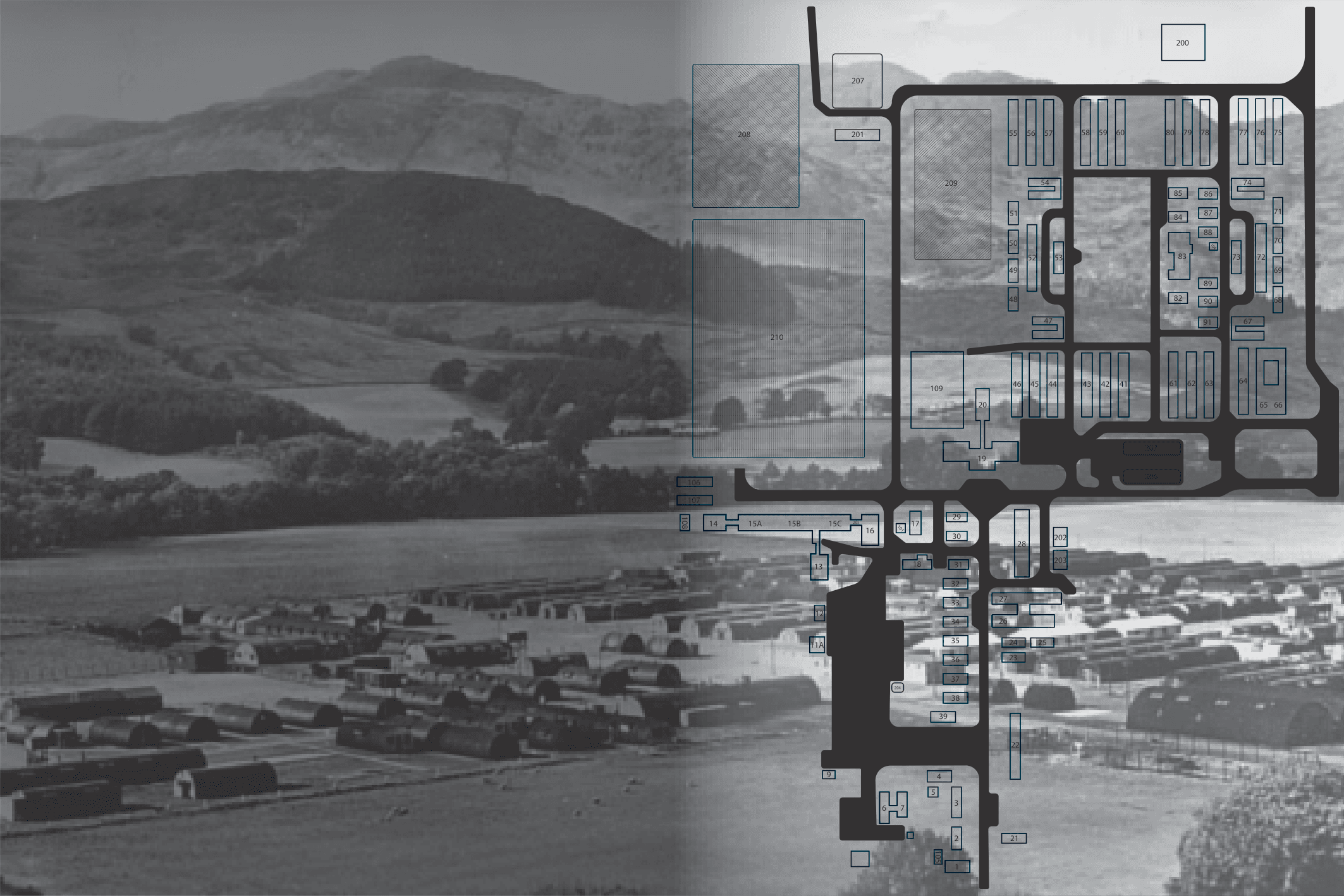
Specification
- •2 × PETG panels (2 m × 1.5 m each) forming 3 m × 2 m landscape — one continuous image across both
- •Left panel: historic aerial photo with ~70 business plaques on stand-offs
- •Right panel: dark site plan overlay showing building footprints
- •Freestanding larch frame — 10× larch posts 150×150 mm, set in ground
- •Plaques: individual logos printed onto separate plaques, bolted through PETG via M6 stand-offs
- •No legend, no "you are here" marker, no hut numbers, no road names, no title
Costs Received
| PETG panels | Service Graphics (Glasgow) | £1,232.80 ex VAT |
| PETG panels | Mackinnon Slater (Edinburgh) | £1,350 + VAT (+ £195 delivery) |
| Larch frame (Option A) | Gordon Milne Joinery (on-site) | £1,500 (labour offset against rent) |
| Larch frame (Option B) | Gordon Milne Joinery (on-site) | £1,930 (P.A.R. larch, labour offset) |
Concerns & Possible Solutions
- !Heritage photo and wayfinding map blended — neither reads clearly on its own→Separate into distinct panels: one for the atmospheric photo/heritage story, one for a clean high-contrast site map
- !~70 plaques on stand-offs = ~140 drill holes through printed PETG (water ingress risk)→Print tenant names directly onto the map artwork, or use a separate modular directory panel with removable slat inserts (no drilling through the map)
- !Plaques on left panel (photo) have no visual connection to buildings on right panel (map)→Use a numbered index alongside the map (Bletchley Park model) — tenant names listed alphabetically with hut numbers, keyed to the map
- !Tenant changes require unbolting plaques, leaving ghost holes — no plan for turnover→Modular directory panel with slide-in or bolt-on name plates (~£20-50 per swap). Or a replaceable printed vinyl insert behind a clear cover
- !No legend, hut numbers, "you are here", or road names — visitors must cross-reference plaque to map→Add to the .ai artwork before printing: hut numbers on every building, road/path names, a prominent "You Are Here" marker at the sign location, and a simple legend
- !Plaque file and most tenant logos still outstanding — only 2-3 of ~70 logos received→Don't wait for logos. Print hut numbers and tenant names directly onto the map or directory. Add logos later as vinyl stickers on individual huts' doors
- !No anti-graffiti laminate or UV protection specified→Ask the printer to apply anti-graffiti overlaminate to the PETG face (standard for outdoor signage, ~10-15% cost uplift). UV-stable inks are standard on both quotes
- !Back of board unfinished — white blockout vinyl and bare larch frame visible from behind→Add a simple printed panel on the reverse: camp history timeline, heritage photo, CDT logo, and a QR code linking to the portal map (/camp page)
Quotes Received
Service Graphics
Glasgow
QUOTE-73192 — 2× PETG acrylic sheets 1.5 m × 2 m, reverse-printed. Requested clarification on mounting, colour, delivery, installation, and material (PETG vs standard acrylic).
Quote received
Chris McIntosh (Key Account Manager) — 07920 591191
Portfolio Examples
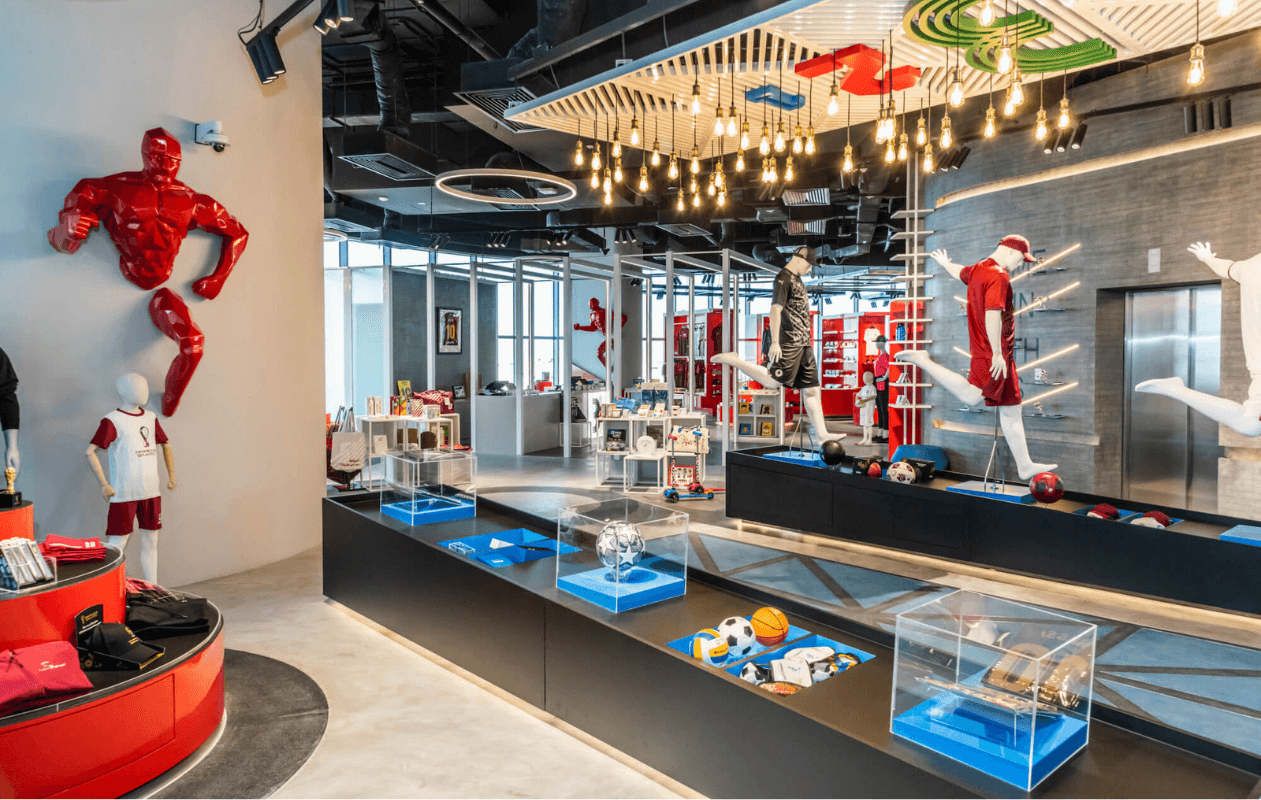
Qatar Olympic & Sports Museum — large-format printed wall graphics

Museum exhibition panels — high-resolution print on rigid substrates
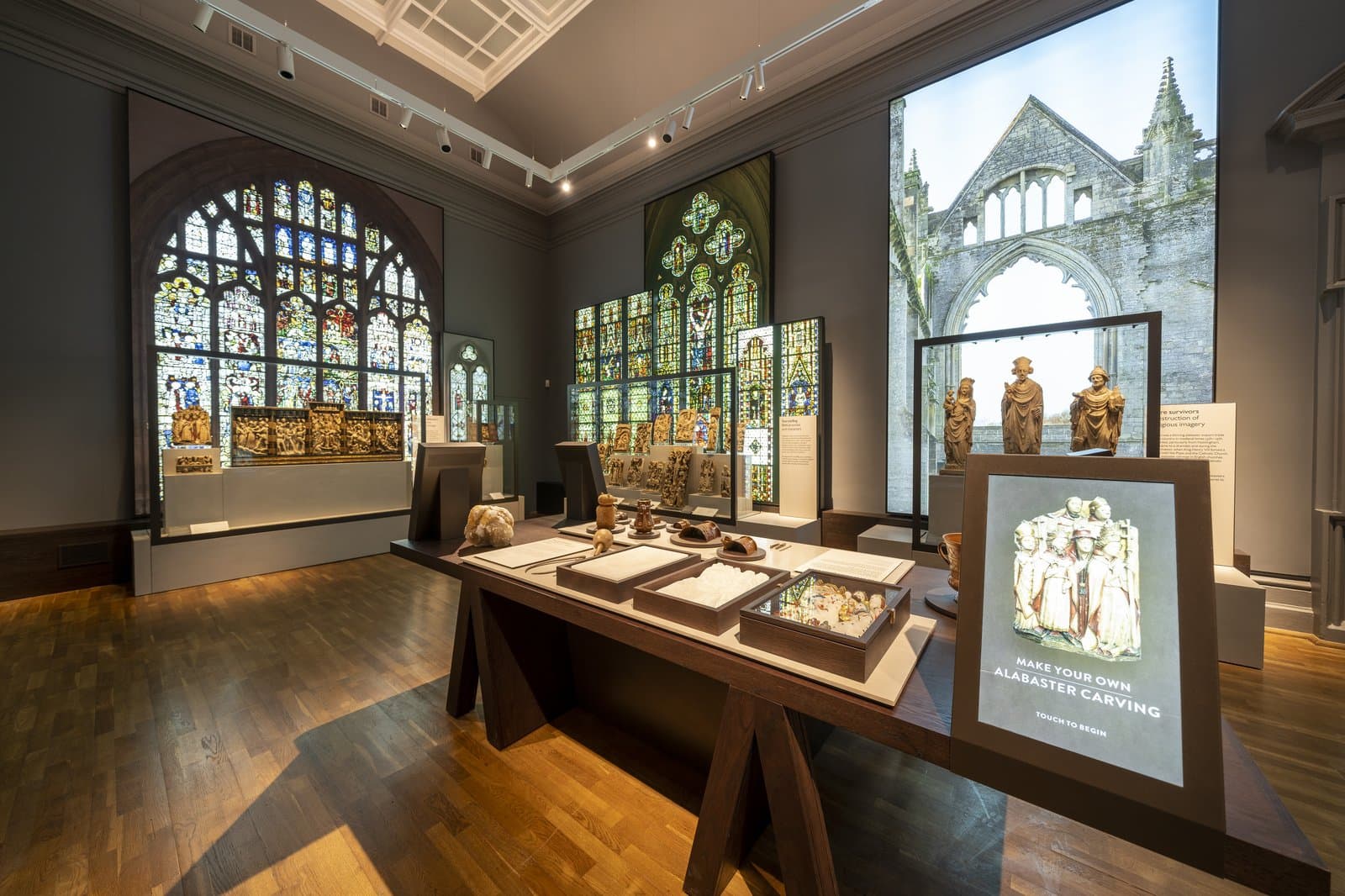
Gallery installation — full-wall printed graphics at exhibition scale
Mackinnon Slater
Edinburgh
2× digital print onto clear vinyl in reverse, backed with white vinyl, mounted to rear of 10 mm PETG, flame polished edge with 0.5 mm chamfer, 10 mm mounting holes. Delivery to PH6 2AB.
Quote received — Ken noted "identical to the first"
Colin Mackinnon — 07584 305469
Portfolio Examples

Fort George — heritage exhibition display panels and signage
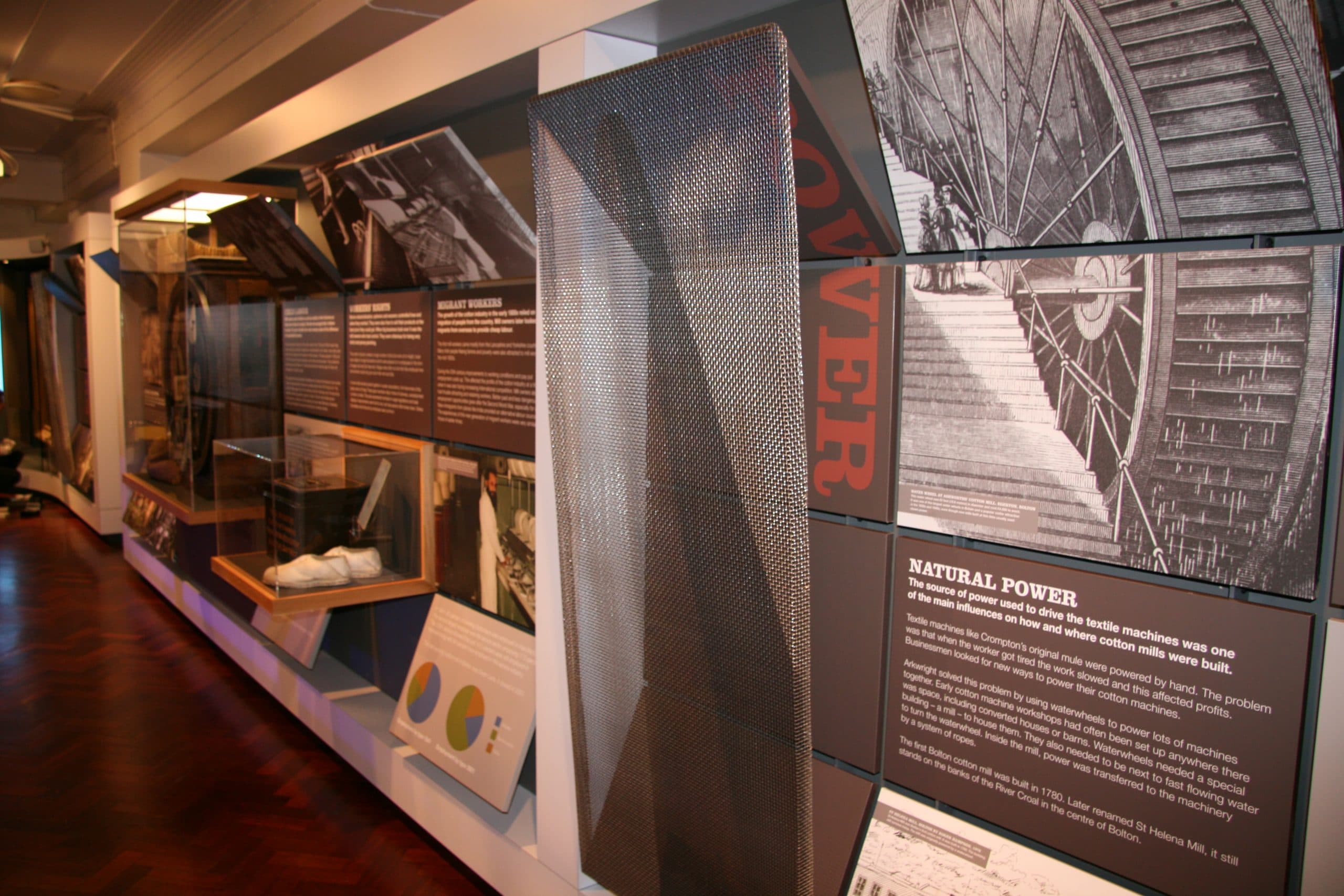
Bolton Museum — gallery graphics and display signage
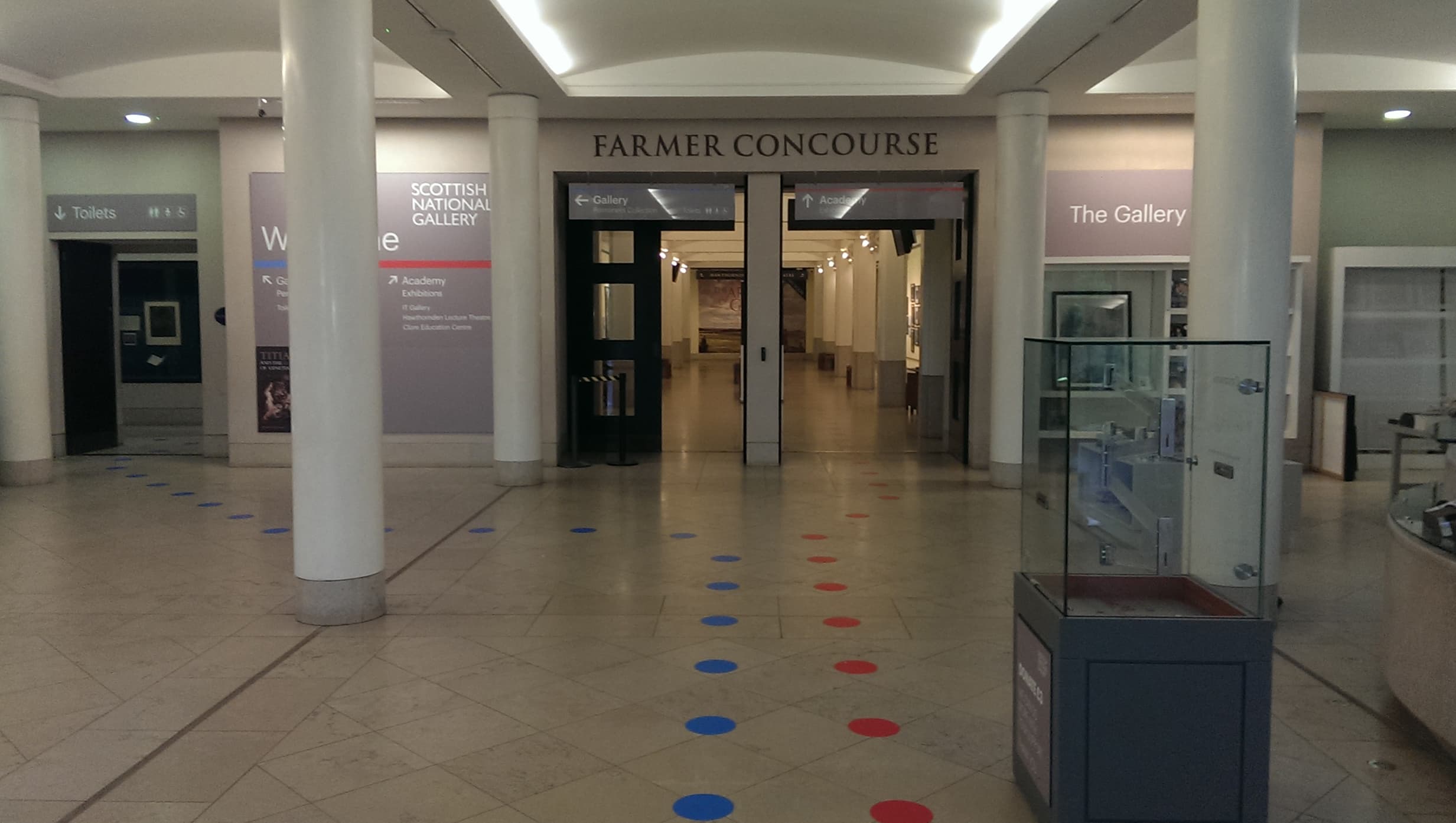
National Gallery of Scotland — large-format exhibition prints
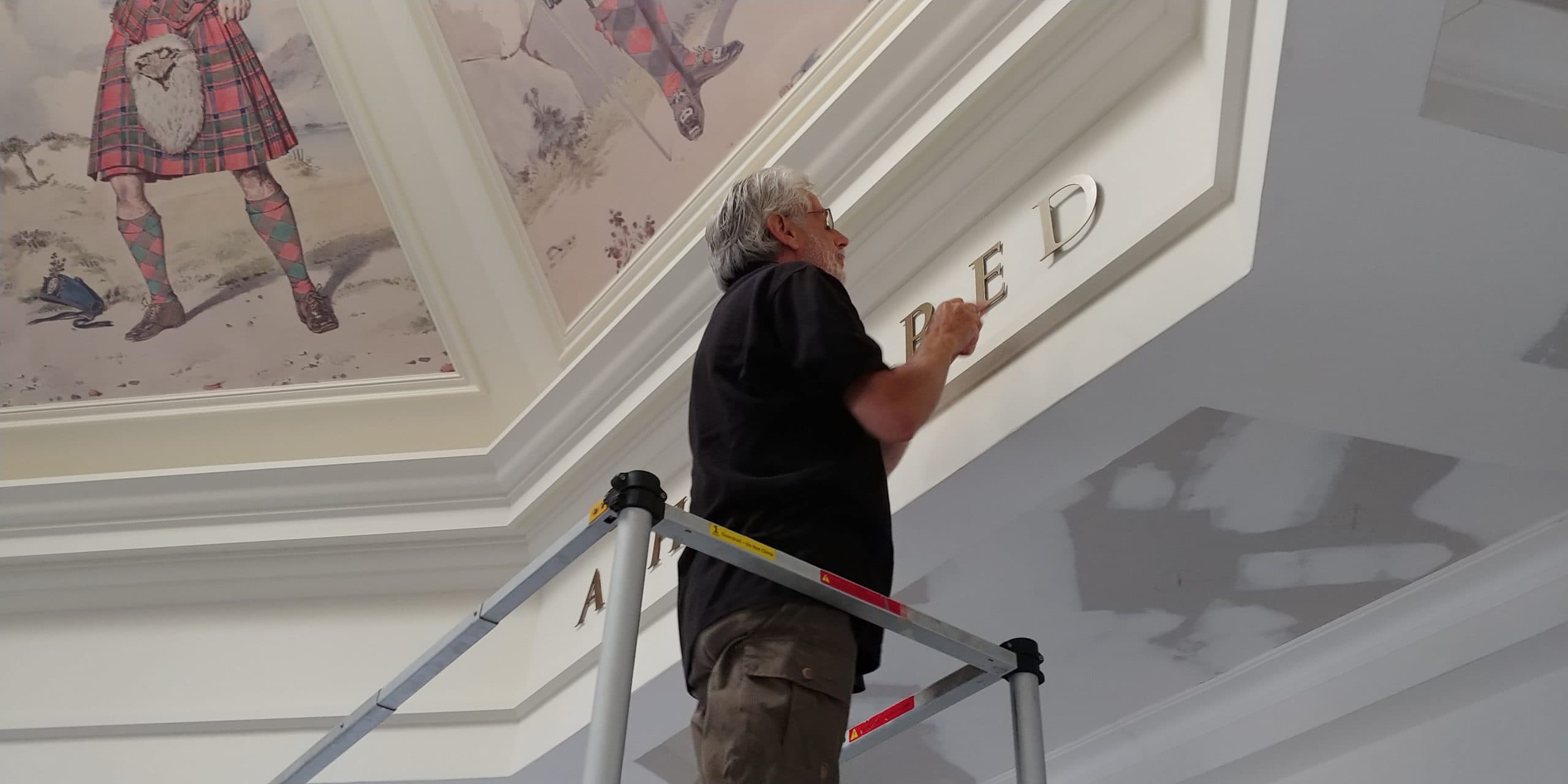
Braemar Castle — heritage visitor signage and graphics
Option 1: Heritage Interpretation Panel
Lectern-style angled panels in oak or hardwood frames, combining a watercolour site map with heritage storytelling. The standard format for UK heritage sites.
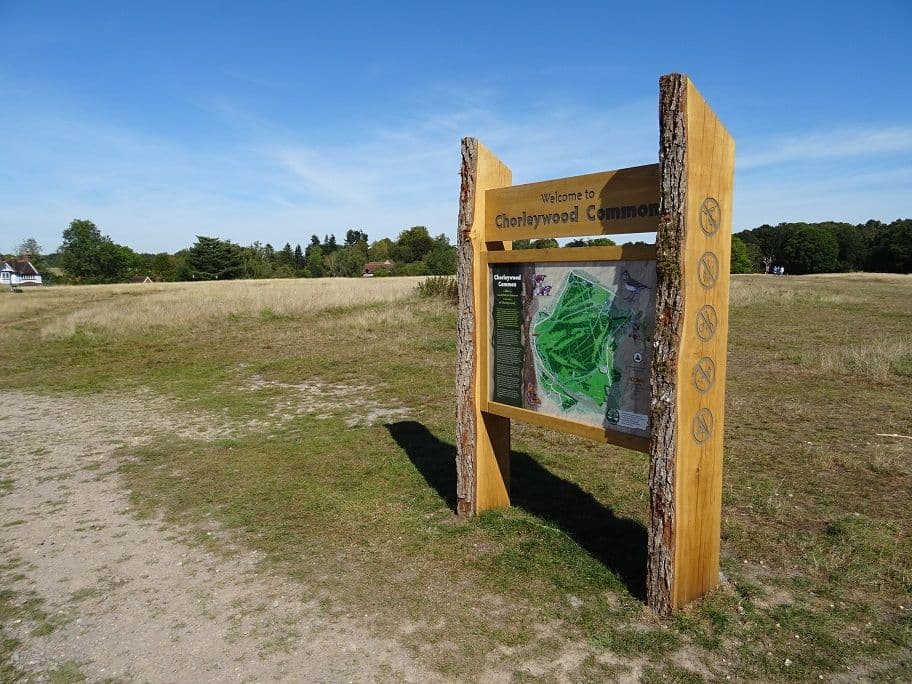
Chorleywood Common
Hertfordshire
Watercolour map in waney-edge oak frame — blends wayfinding with natural history without either competing. Clean separation of map and interpretive content.
Source: FWDP →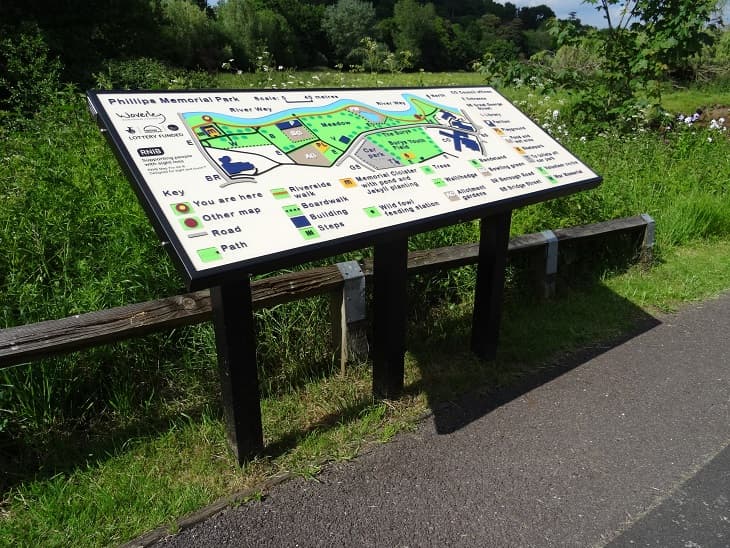
Phillips Memorial Park
Waverley, Surrey
Victorian-inspired Cavalier range with tactile elements. Park layout, heritage info, and amenities all on one panel — but cleanly zoned, not blended over a photo.
Source: FWDP →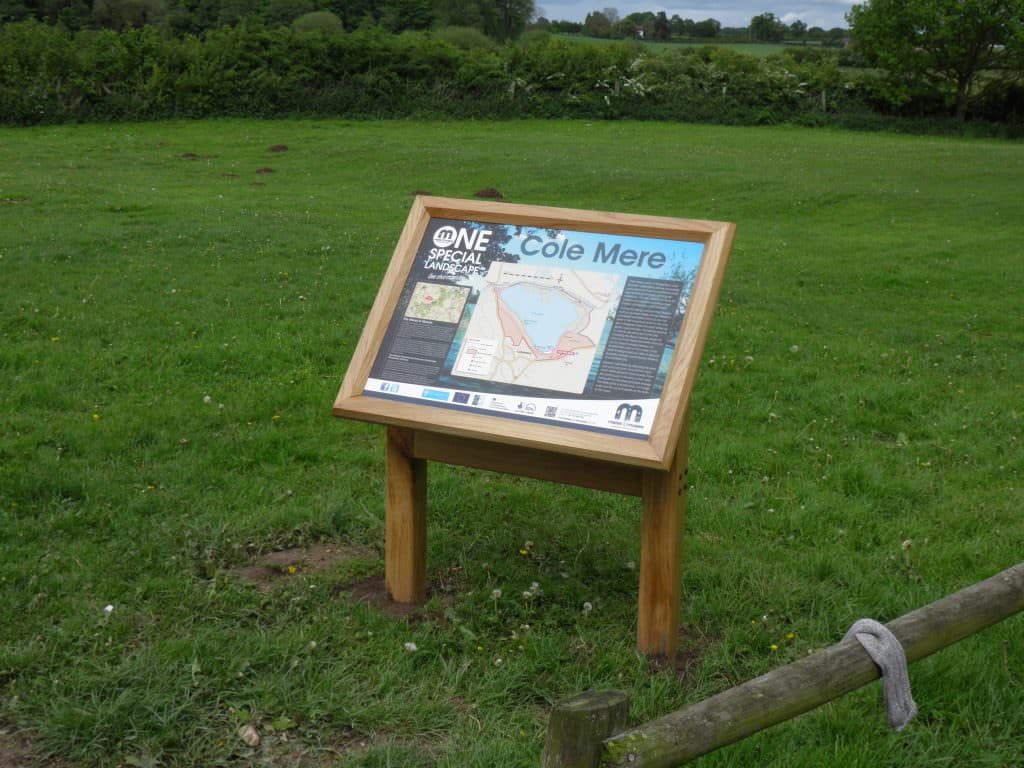
Cole Mere Interpretation
Shropshire
A2 panel in twin-leg oak lectern frame. Angled reading surface reduces glare and feels inviting. Standard format across hundreds of UK heritage sites.
Source: Shelley Signs →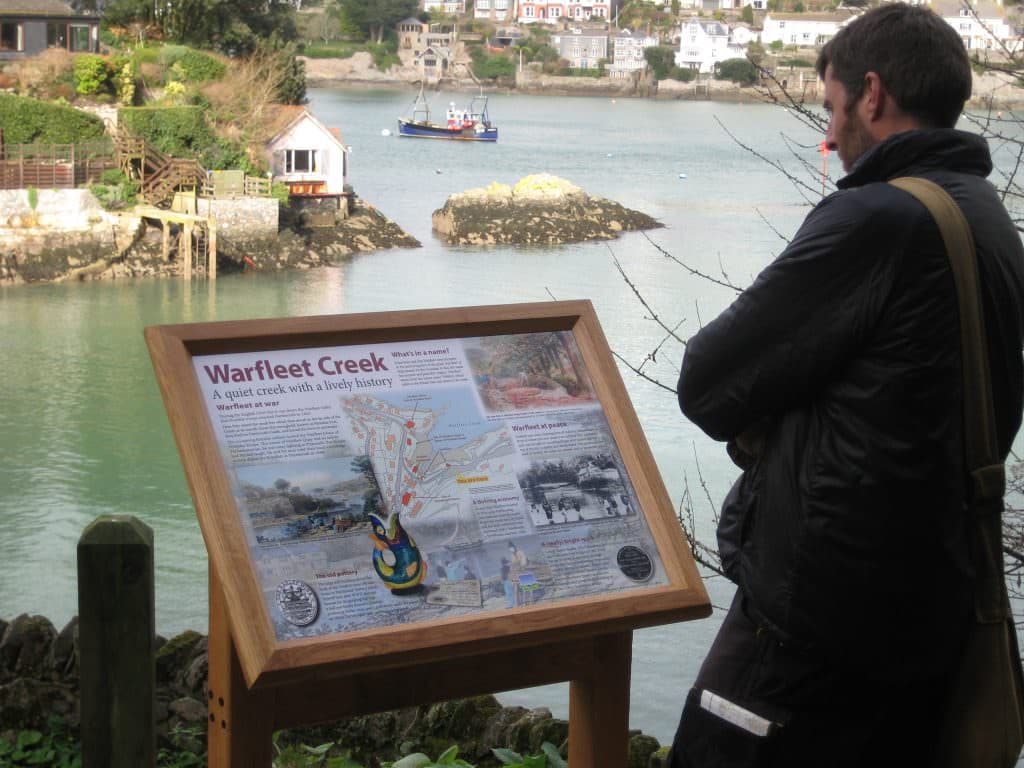
Warfleet Creek
Devon
Oak lectern in a rural landscape setting — demonstrates how a well-framed panel complements rather than dominates the environment. Important for a Category A listed site.
Source: Shelley Signs →Advantages
- +Industry-standard format for UK heritage sites — visitors expect it
- +Oak frame weathers gracefully and suits the camp aesthetic
- +Lectern angle reduces glare, easier to read than vertical boards
- +10-year warranty on GRP/laminated graphics against fading
- +Separates heritage story from wayfinding cleanly
Drawbacks
- -Doesn't solve the tenant directory problem (static print)
- -Limited panel size — won't fit 120 business names
- -Would need a separate directory board alongside
Option 2: Modular Tenant Directory
Post-mounted or totem directory boards with individually removable name panels. When a tenant changes, swap one panel — not the whole sign. The standard for business parks and industrial estates.
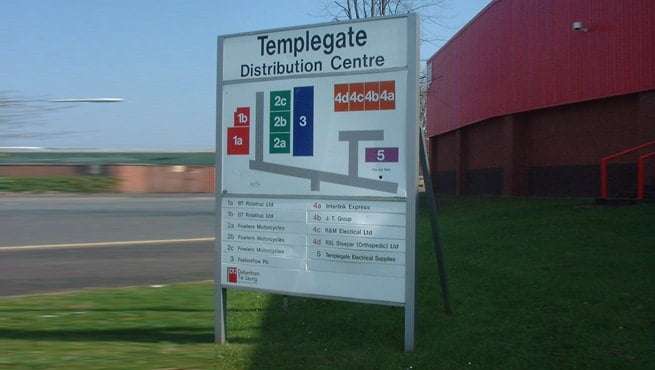
Templegate Distribution Centre
Leeds
Combines a colour-coded site map with a directory of tenant names, all on one post-mounted sign visible from vehicles. Removable slat panels for tenant changes.
Source: Ward Signs →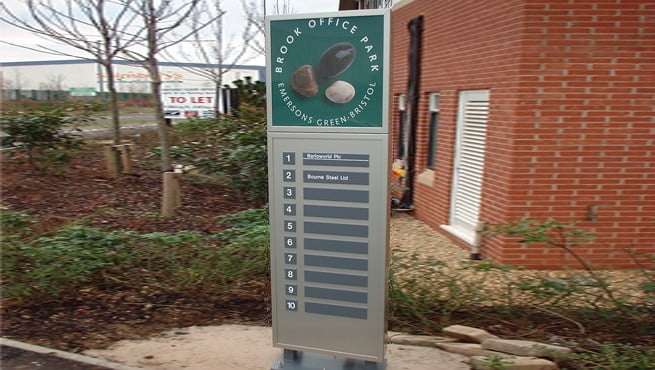
Brook Office Park
UK
Changeable slat directory — each business panel can be independently repositioned, removed, or replaced without touching the rest of the sign.
Source: Ward Signs →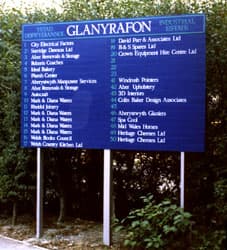
Glanyrafon Industrial Estate
Brecon, Wales
3.5 m tall sign with ~50 company nameplates. Each nameplate can be individually removed, cleaned, and reused when tenants change. Aluminium + stainless steel.
Source: Signmakers Brighton →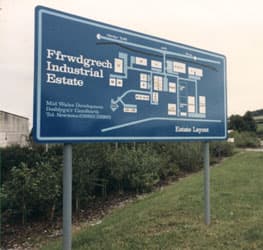
Ffrwdgrech Industrial Estate
Brecon, Wales
Large-scale map sign in aluminium — drivers can read it from the cab. Building numbers are printed on the map; tenant names are on the separate directory panel.
Source: Signmakers Brighton →Advantages
- +Tenant changes cost ~£20-50 per panel, not £500+
- +No drill holes through the map graphic
- +Aluminium/steel construction — 20+ year lifespan
- +Separates permanent info (map, hut numbers) from changeable info (tenant names)
- +Proven at scale — estates with 50-100+ tenants
Drawbacks
- -Industrial/corporate look — less heritage character
- -Doesn't tell the camp's story (purely functional)
- -Would need heritage interpretation panel alongside
Option 3: Integrated Wayfinding System
A coordinated set of signs — entry totem, site map, directional fingerpost, and building identification — working as a system rather than one big board.
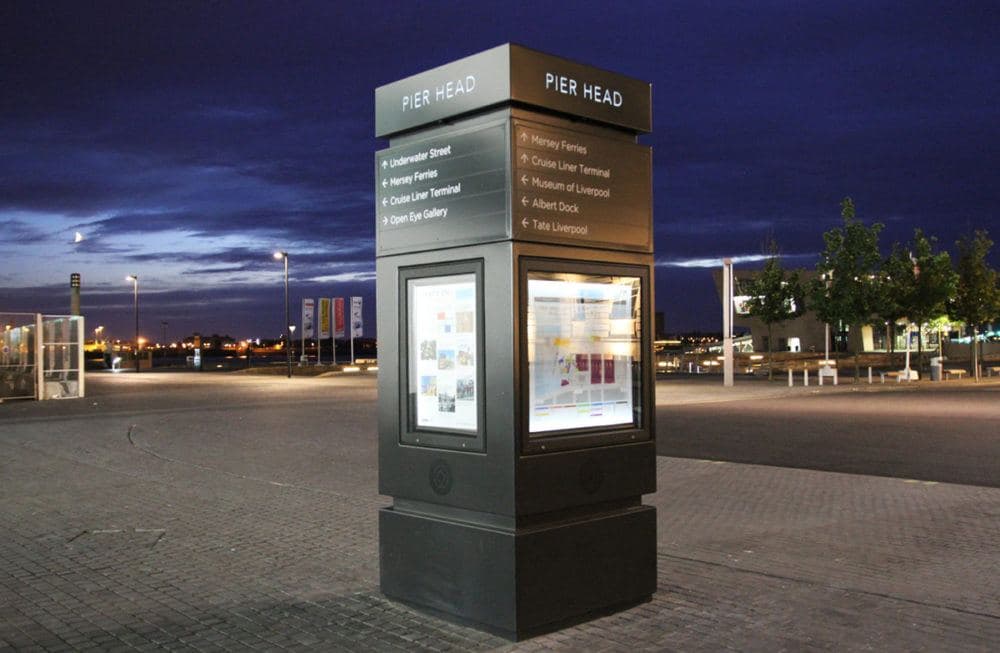
Pier Head, Liverpool
Liverpool
Illuminated 4-sided wayfinding totem with directional arrows and map panels. Part of a coordinated system across the Pier Head heritage site — not a single sign, but a family of signs.
Source: IS Group →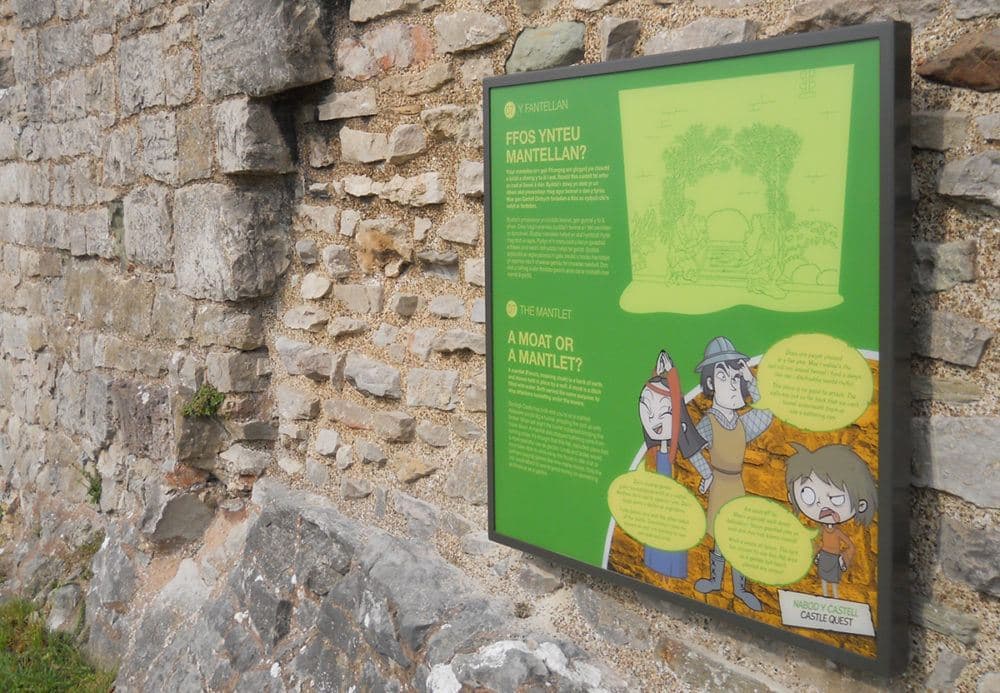
Denbigh Castle
Denbighshire, Wales
Bilingual heritage interpretation panel (Welsh/English) with illustrated content. Wall-mounted, sympathetic to the castle setting. Shows how heritage signs can feel part of the place.
Source: IS Group →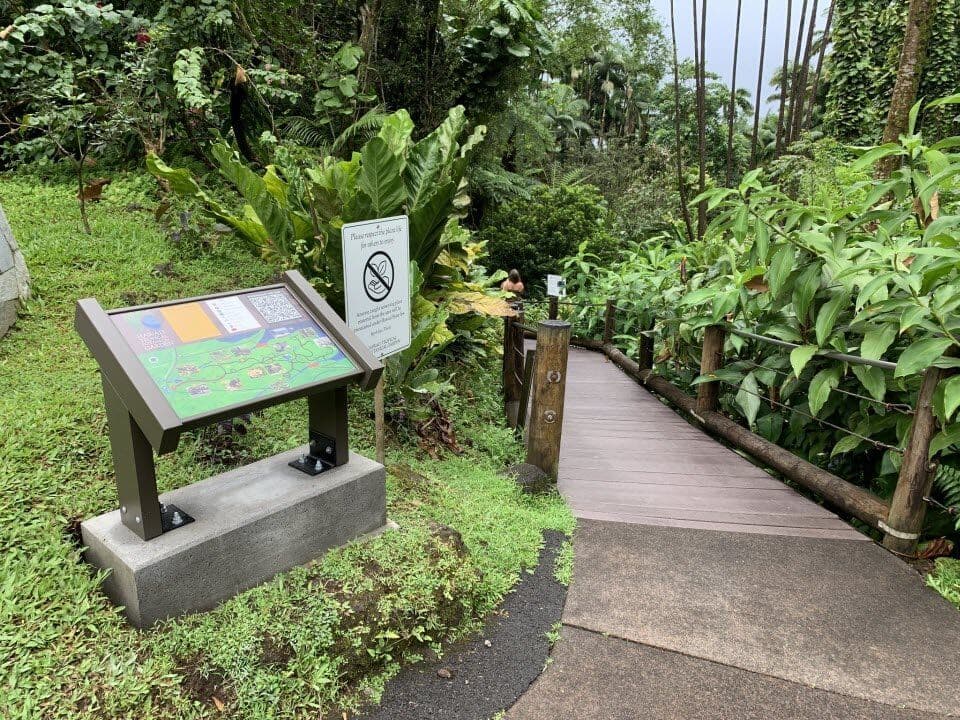
Hawaii Tropical Botanical Garden
Hawaii, USA
Low-profile lectern on concrete plinth at a decision point. Replaced paper handouts with permanent wayfinding. Key principle: place signs where visitors naturally pause.
Source: Pannier Graphics →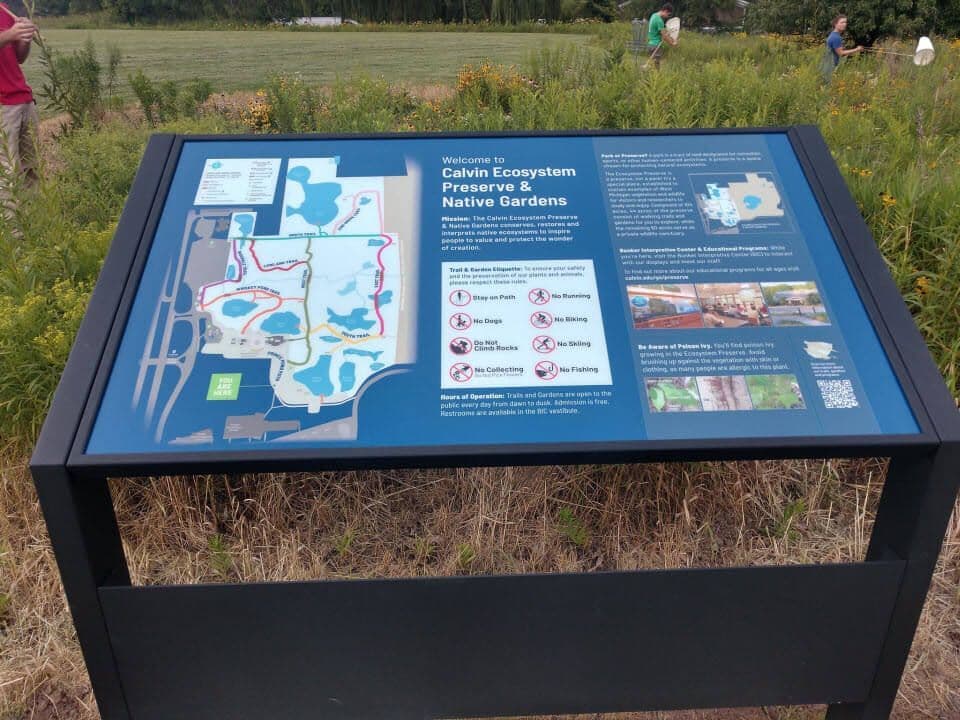
Calvin Ecosystem Preserve
Michigan, USA
Map + rules + educational content integrated on one sign at the trailhead. Fiberglass-embedded panels for extreme weather durability. Visitors feel oriented from the moment they arrive.
Source: Pannier Graphics →Advantages
- +Best visitor experience — oriented at every decision point
- +Each sign does one job well (entry, direction, info, identification)
- +Can mix heritage and functional signage in one coordinated family
- +Scalable — add signs as the site develops
Drawbacks
- -Most expensive option — multiple signs, not one
- -Requires a design system (consistent typography, colours, materials)
- -Overkill for the current PKC-funded scope?
Option 4: The Bletchley Park Model
The closest analogy to Cultybraggan — a WWII military site with numbered buildings, now a heritage attraction. Clean illustrated map with colour-coded zones and a building index. No photo backgrounds.
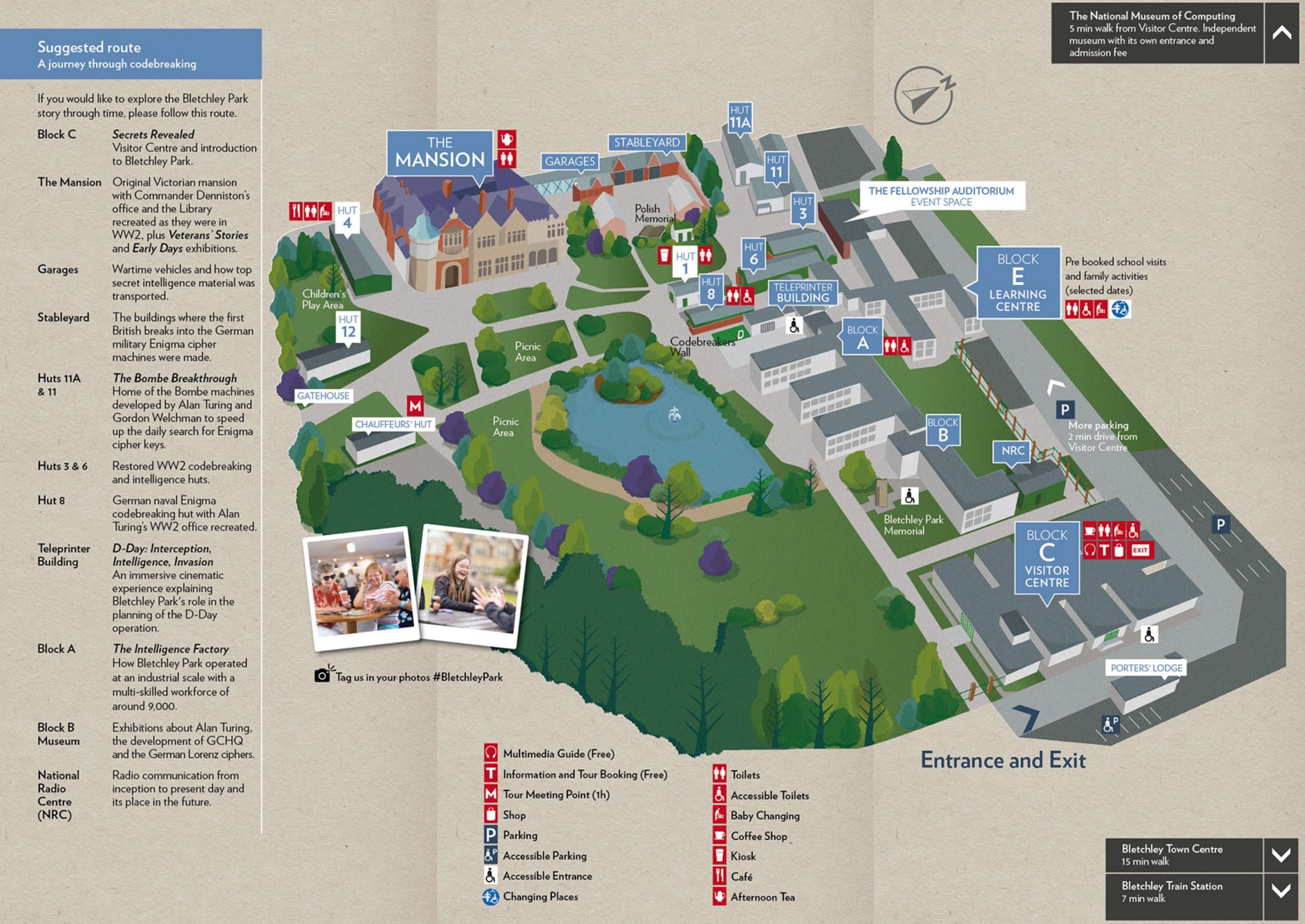
Bletchley Park Visitor Map
Milton Keynes
Clean illustrated map with numbered buildings, colour-coded zones, suggested walking route, and a separate alphabetical index. The map IS the sign — no photo behind it. This is how a well-funded WWII heritage site handles wayfinding.
Source: Bletchley Park →Advantages
- +Direct precedent — WWII site with numbered buildings, same use case
- +Clean, legible map that works at viewing distance
- +Building index separate from map — easy to update
- +Colour coding helps visitors identify zones instantly
- +Proven at scale with thousands of daily visitors
Drawbacks
- -Bletchley has professional design budget (£millions)
- -Their map is primarily for a visitor leaflet, not a 3 m × 2 m board
- -Less "character" than a heritage interpretation panel
Recommended: Hybrid Approach
Combine the best elements — separate what's permanent from what changes.
Panel 1 — Heritage Welcome
The aerial photo, camp history, CDT logo. Beautiful, atmospheric, permanent. Oak-framed lectern or vertical panel.
Panel 2 — Site Map
Clean illustrated map (Bletchley-style) with hut numbers, roads, "you are here" marker, and a legend. No photo background. Permanent.
Panel 3 — Tenant Directory
Modular directory with removable name panels (Ward Signs / Signmakers Brighton style). Numbered to match the map. Cheap to update when tenants change.
Reference sources: